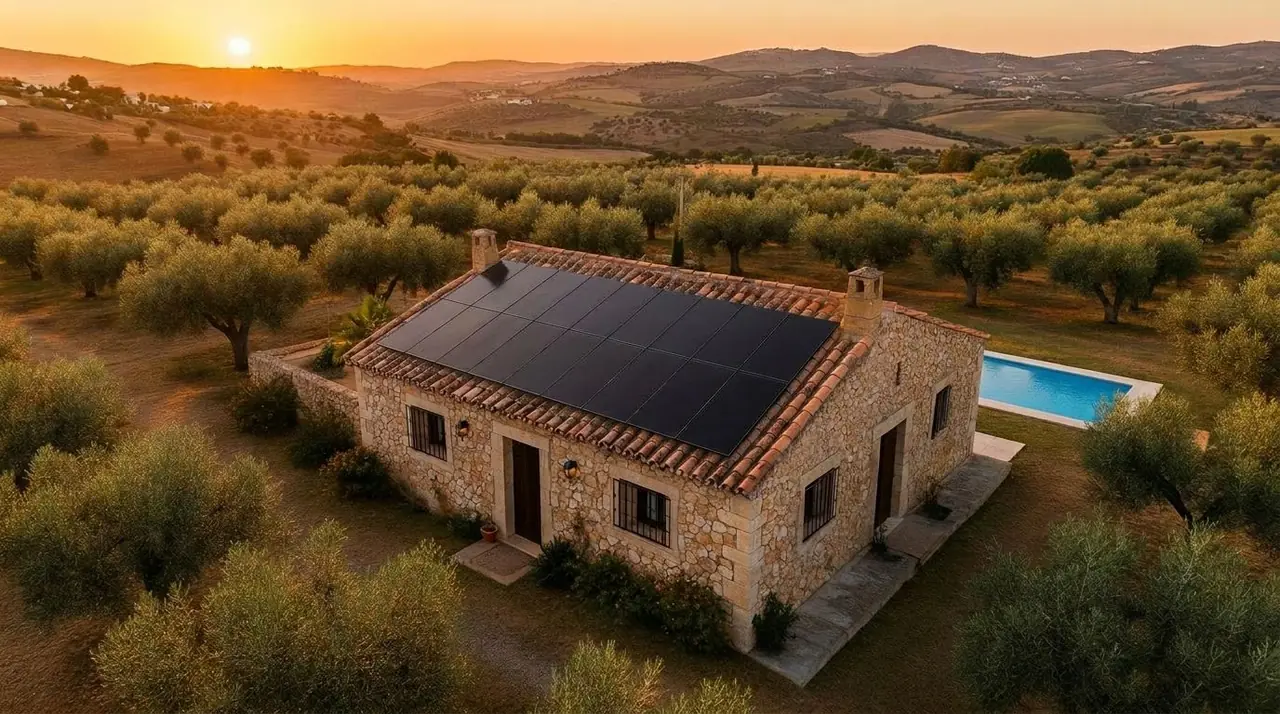

EU Mandate: All New Spanish Buildings Must Be Near-Zero Energy by 2028
The EU Green Deal requires all new buildings in Spain to be near-zero energy by 2028. Existing property owners who proactively install solar are ahead of the curve, increasing their property value and future-proofing their investment.
The European Commission’s Green Deal is reshaping the Spanish real estate landscape, setting a definitive deadline for building efficiency. By 2028, all new constructions across Spain must meet 'near-zero energy' standards. This shift is not merely a regulatory hurdle for developers; it is a signal to current homeowners on the Costa del Sol that energy independence is becoming the new standard. As the province of Malaga leads in luxury developments and residential tourism, aligning your property with these upcoming standards is no longer just an environmental choice—it is a strategic financial move to preserve and enhance asset value.
For residents in Marbella, Estepona, and Mijas, the transition to high-efficiency housing is supported by one of the most favorable climates in Europe. While the mandate focuses on new builds, existing properties are already seeing the impact on market valuations. Homes equipped with a solar panel installation Costa del Sol wide are increasingly prioritized by international buyers who expect modern infrastructure. By integrating renewable energy now, property owners ensure their homes do not fall behind the curve as the 2028 deadline approaches, effectively future-proofing their investment against stricter future energy audits.
Typical Spanish figures highlight why this region is the prime location for such upgrades. With PVGIS yields reaching 1,700 to 1,800 kWh/kWp per year, the efficiency of solar energy here is unmatched by Northern European counterparts. This high yield, combined with the legal framework established by RD 244/2019, allows homeowners to not only generate their own electricity but also monetize surpluses. When you consider the current fiscal environment, including potential IBI and IRPF deductions available for energy improvements, the business case for transitioning to solar becomes undeniable.
Energy storage technology is the next logical step for those seeking true autonomy. A home battery storage Spain installation allows you to capture the intense midday sun and utilize it during the evening hours when cooling or heating demands are highest. This is particularly relevant for the large villas of the Costa del Sol that feature complex HVAC systems. By pairing generation with storage, owners can drastically reduce their reliance on the grid and mitigate the impact of fluctuating utility prices, which is a core component of the near-zero energy philosophy.
Beyond electricity, the electrification of mobility is central to the EU’s vision. Integrating an EV charger installation into your home energy system adds another layer of convenience and value. As Malaga moves toward greener urban planning, having the infrastructure to charge a vehicle at home using your own solar energy represents the pinnacle of sustainable living. It transforms the home from a passive shelter into an active energy hub, capable of powering both your lifestyle and your transportation at a fraction of the traditional cost.
Property owners should also consider the synergy between solar power and modern climate control. Technologies like aerotermia, which use ambient air temperature for heating and hot water, are exceptionally efficient when powered by rooftop panels. For existing homes in the Malaga region, upgrading to these systems often results in a significant jump in the property's energy certificate rating. This rating is increasingly becoming a deciding factor in property sales and rentals, as savvy tenants and buyers look for low running costs.
Practical next steps involve a comprehensive energy audit to determine the specific needs of your property. Whether it is calculating the number of panels required to offset your pool pump’s consumption or determining the best placement for maximum winter yield, professional guidance is essential. The typical payback period for such installations currently sits between 5 to 8 years, a timeframe that is significantly shortened when accounting for the increased property value and available tax incentives.
Ultimately, the EU mandate for 2028 serves as a wake-up call for the entire Mediterranean coast. While new builds will be forced to comply, current owners have a unique window of opportunity to upgrade voluntarily. Taking action now means enjoying years of reduced bills and high-performance living before the market becomes saturated with these requirements. Staying ahead of the legislation ensures your home remains a premier asset in one of Europe’s most competitive real estate markets.