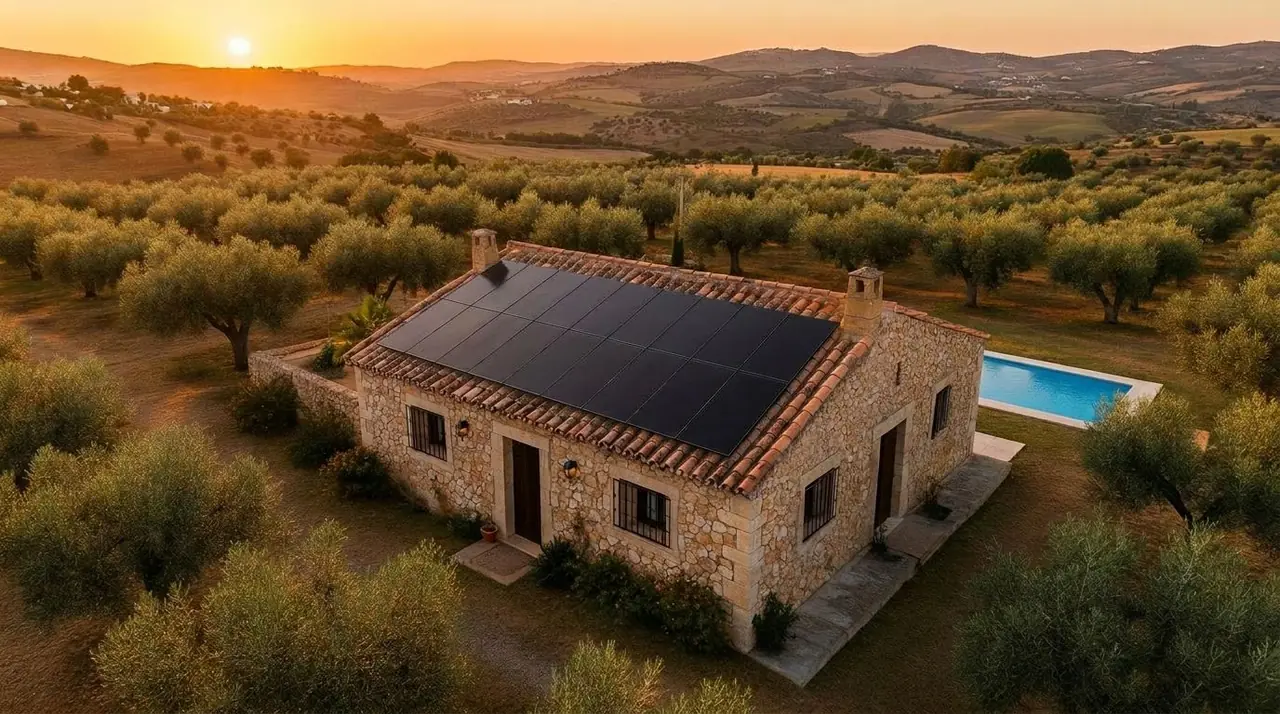

Andalusia Targets 80% Renewable Energy by 2030
Andalusia has set an ambitious target of sourcing 80% of electricity from renewable sources by 2030. Homeowners who install solar now are contributing to this goal while locking in decades of energy savings.
The regional government of Andalusia has officially announced a transformative roadmap for the decade, aiming to source 80% of its total electricity consumption from renewable sources by 2030. This strategy positions Southern Spain as the leading engine of Europe’s green energy transition. For residents on the Costa del Sol, this shift isn't just a political milestone; it represents a fundamental change in how power is generated, distributed, and priced. By focusing heavily on wind and, most importantly, solar energy, the region is leveraging its greatest natural asset to achieve energy independence and reduce carbon emissions.
For homeowners in towns like Malaga, Marbella, and Estepona, this announcement serves as a clear signal that the era of fossil fuels is drawing to a close. The regional strategy aligns with the national framework established by RD 244/2019, which simplified the administrative process for self-consumption and paved the way for the compensation of excess energy. As the grid moves toward a higher percentage of renewables, decentralized production—meaning solar panels on private rooftops—becomes a critical component of the regional infrastructure.
Geographically, the Costa del Sol is uniquely positioned to benefit from this 2030 target. With typical PVGIS yields in the region reaching between 1,700 and 1,800 kWh per kWp installed annually, the efficiency of a solar panel installation in Malaga is among the highest in Europe. A standard domestic system can often generate more power than a household consumes during peak daylight hours. This high yield is the primary reason why the typical payback period for a residential installation currently sits between 5 and 8 years, depending on individual consumption patterns and available incentives.
To support this ambitious 80% target, the government continues to offer various financial mechanisms to lower the entry barrier for property owners. Beyond direct grants, residents can often benefit from substantial IBI (property tax) reductions of up to 50% for several years, depending on the local municipality such as Mijas or Fuengirola. Furthermore, IRPF (income tax) deductions are available for energy efficiency improvements, significantly accelerating the return on investment. These fiscal benefits, combined with the plummeting costs of technology, make the current moment an ideal time to transition.
Modern systems are also becoming more sophisticated. While generating energy during the day is highly effective, many owners are now looking into home battery storage in Spain to maximize their self-consumption rates. By storing the midday surplus, residents can power their homes through the night with 100% green energy, further reducing their reliance on the traditional grid and protecting themselves against fluctuating market prices. Additionally, the rise of the virtual battery allows owners to accumulate the value of their excess production to offset the fixed costs of their electricity bill, effectively reaching a zero-euro invoice.
For those considering the switch, the practical next steps involve more than just panels. A holistic approach to energy efficiency often includes the integration of aerotermia in Malaga to replace traditional gas or electric boilers, and the addition of an EV charger installation to prepare for the transition to electric mobility. The first step for any homeowner should be a professional site survey and a personalized production study. By acting now, property owners on the Costa del Sol are not only securing their financial future but are also becoming active participants in Andalusia’s journey toward a sustainable 80% renewable grid.