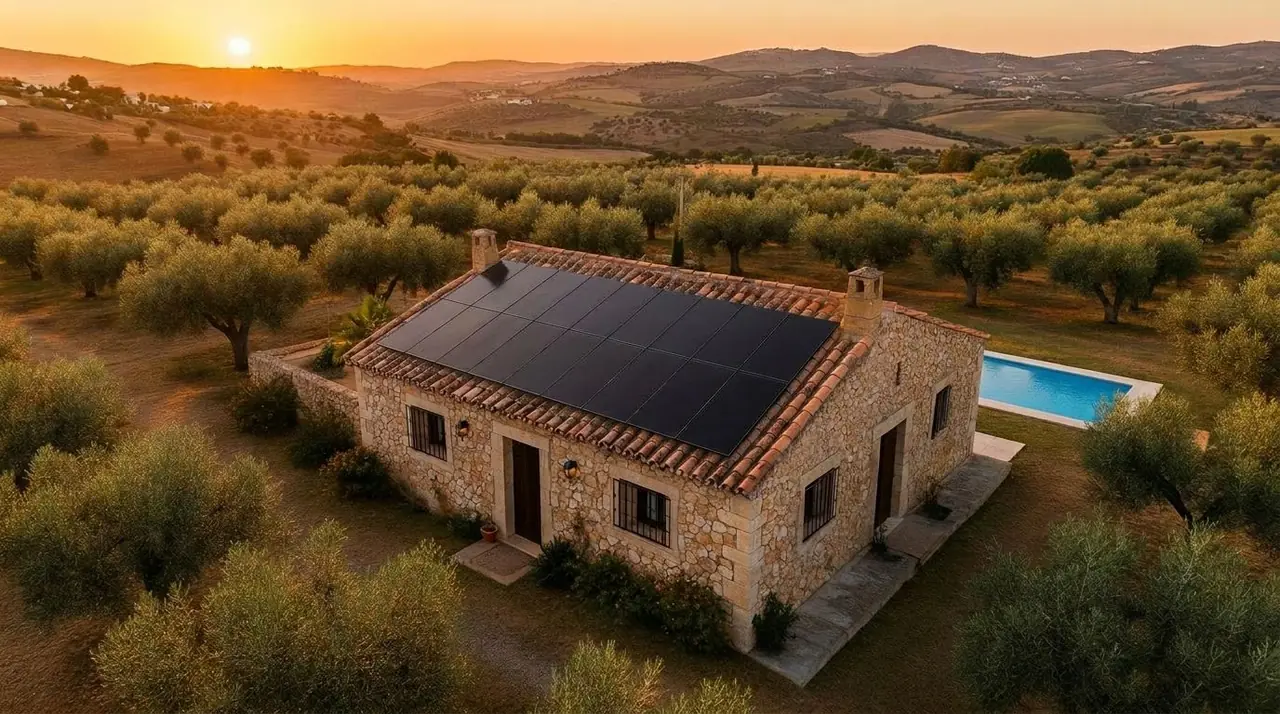

Costa del Sol Power Outages Boost Battery Demand by 200%
Increasing power outages on the Costa del Sol have driven a 200% surge in demand for home battery backup systems. A solar + battery setup ensures your home stays powered even during grid failures.
The Costa del Sol is facing a growing challenge as its infrastructure struggles to keep pace with rapid urban development and increasing tourism. Recent reports from outlets like Diario Sur have highlighted a concerning trend: frequent and unpredictable power outages. These fluctuations are not just a minor inconvenience but a significant disruption for homeowners who rely on a stable supply for air conditioning, kitchen appliances, and home offices. Consequently, there has been a 200% surge in demand for home battery storage Spain, as residents look for ways to gain energy independence and protect their comfort from an unstable grid.
Traditionally, a solar panel installation Costa del Sol was viewed primarily as a tool for financial savings. With the region boasting high irradiation levels—often reaching PVGIS yields of 1,700 to 1,800 kWh/kWp per year—the return on investment was already attractive. However, the shift toward battery backup signifies a change in priorities. Homeowners are no longer just asking how much money they can save, but how they can keep the lights on when the local grid fails. Modern lithium-ion systems now allow for 'island mode' or backup functionality, ensuring that critical loads continue to run even during a blackout.
In cities like Marbella, Estepona, and Mijas, the demand for these systems is particularly high due to the prevalence of luxury villas and high-consumption households. Integrating a battery into a new or existing system transforms a standard PV setup into a resilient mini-utility. By storing excess energy generated during the sunny daylight hours, families can power their homes through the night or during grid failures. This trend is also being fueled by the rise of electric vehicles, leading to increased requests for EV charger installation alongside storage solutions to ensure the car can be charged even if the sun isn't shining.
From a financial perspective, adding storage to a solar array remains a sound investment. While the upfront cost is higher, the typical payback period for a comprehensive solar plus battery system in Andalusia ranges between 5 to 8 years, depending on consumption patterns and available incentives. Under the framework of RD 244/2019, the legalization process is straightforward, allowing owners to safely connect their systems to the grid while maintaining the ability to operate independently when necessary. Furthermore, many municipalities offer substantial IBI tax deductions for several years following a certified installation.
Local property owners should also consider the broader ecosystem of home energy. Beyond just electricity, integrating aerotermia systems for heating and cooling can further reduce reliance on external utilities. When paired with a smart battery, these high-efficiency systems can be programmed to run during peak solar production or using stored energy, maximizing the utility of every photon captured by the panels. This holistic approach not only increases the property value but also significantly lowers the carbon footprint of the household.
For those considering an upgrade, the first step is a professional assessment of the property's energy needs. Factors such as roof orientation, shading, and the specific circuitry of the home will determine the best storage capacity. It is also vital to ensure that any installation is performed by a certified team to guarantee safety and compliance with Spanish electrical regulations. With the current climate of grid instability, moving toward a self-sufficient model is no longer just a luxury—it is becoming a practical necessity for life on the Costa del Sol.